
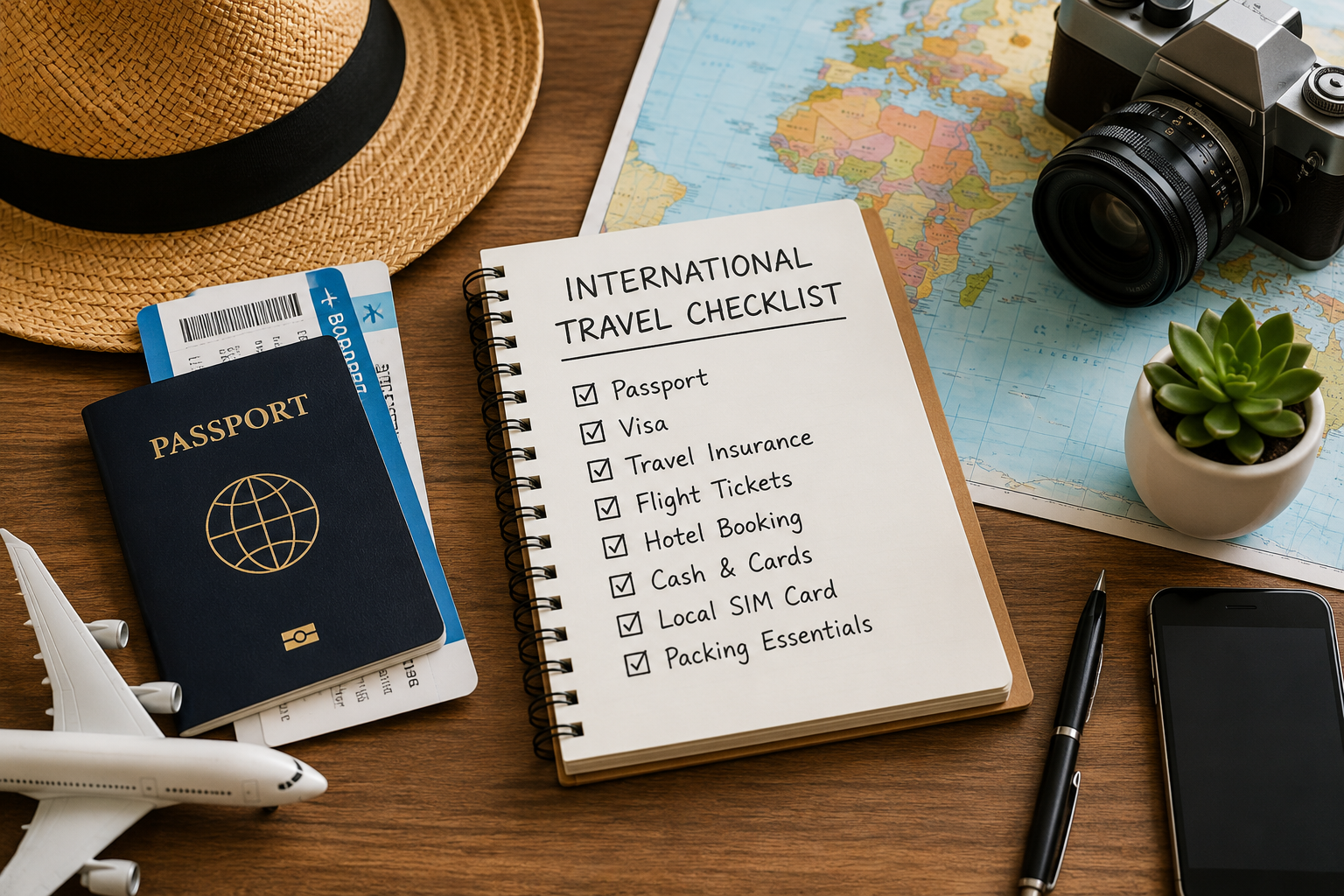
Selecting an international destination requires verifying passport validity and entry regulations for the specific region. Successful transit depends on early documentation processing and strategic financial planning to ensure continuous access to resources.
First-time travelers often encounter administrative delays or financial freezes due to inadequate preparation. This guide provides 25 essential international travel tips for first-time travelers to facilitate a structured and secure departure process.
- International Travel Tips First Time: Processing Documentation and Preparing Early
- Managing Financial Logistics and Notifying Banks
- Executing Airport Procedures and Arriving Early
- Adapting to Local Norms and Respecting Culture
International Travel Tips First Time: Processing Documentation and Preparing Early
Successful international travel requires a passport valid for six months beyond entry, specific visas for regions like the Schengen Area or Asia, and digital backups of all identification. Secure financial notifications and local SIM cards ensure connectivity, while arriving three hours before long-haul flights mitigates terminal delays.
Maintaining awareness of terminal procedures and document expiration dates constitutes the first operational phase of a successful departure.
Verifying Passport Validity and Entry Rules
Verifying the six-month passport validity rule is mandatory. Many sovereign states deny entry if documents expire shortly after arrival. Confirm your specific expiration date prior to finalizing any flight bookings.
Research visa requirements for your destination immediately. Certain nations demand electronic travel authorizations or physical stamps. Consult official government portals for updates. Verify if your route requires mandatory health certificates or vaccination records.
Review the About section for procedural context. Contact official representatives to resolve specific documentation inquiries before departure.
Organizing Document Backups and Digital Storage
Generate encrypted digital copies of your passport and identification. Store these files in a secure cloud folder. This protocol ensures continuous access if physical documents are lost or stolen.
Print physical backups of travel insurance policies. Keep paper copies of hotel bookings in carry-on luggage. Analog records remain vital when mobile device batteries deplete or network signals fail.
Maintain emergency contact details in an offline digital format. Include local embassy numbers and insurance hotlines. This data allows for immediate access during critical administrative crises.
Reference Brooklyn Bridge facts for historical site documentation. Secure all 25 Essential International Travel Tips for First-Time Travelers.
Managing Financial Logistics and Notifying Banks
Preparation requires a functional strategy for capital management to prevent account restrictions or excessive international transaction costs. Effective coordination with financial institutions ensures continuous access to funds during the 25 Essential International Travel Tips for First-Time Travelers.
Coordinating Bank Notifications and Payment Methods
Inform your financial institutions of your travel dates. Specify every country you plan to visit. This prevents fraud alerts from freezing your primary credit cards.
Use low-fee international banking apps to access local currency. These platforms often offer better exchange rates than airport kiosks. Always carry a secondary payment card in a separate piece of luggage. This backup saves you if your main wallet disappears.
- Notify banks of dates
- Use travel-friendly cards
- Carry emergency cash
- Keep a backup card hidden
Selecting Connectivity Solutions and Data Security
Compare local SIM cards against international roaming plan costs. Buying a local chip is usually much cheaper. Research providers at your arrival airport for immediate connectivity.
Download offline maps for areas with restricted data access. This prevents getting lost in remote locations. Use secure VPN services when connecting to public airport or hotel networks.
Utilizing reliable digital tools ensures precise navigation during complex transit phases. Verify device compatibility for eSIM technology prior to departure. Maintain offline backups of all critical travel documentation.
Executing Airport Procedures and Arriving Early
Once your finances and data are secure, the physical journey begins at the terminal where timing is everything for a stress-free departure.
Timing Airport Arrival and Security Screening
Arrive at the departure terminal three hours before takeoff. International flights require extra time for document checks. Don’t risk missing your flight due to long queues.
Prepare liquids and electronics for security screening protocols. Keep your laptop and 1-quart bag of gels easily accessible. This speeds up the process for everyone. Monitor gate assignments via airline mobile notification systems to catch last-minute changes.
Visit the Eiffel Tower experience for 25 Essential International Travel Tips for First-Time Travelers. Stay alert.
Maintaining Transit Health and Pacing
Adjust sleep patterns to the destination time zone immediately. Set your watch as soon as you board. This helps your internal clock sync faster with local time.
Maintain high hydration levels during long-haul flight segments. Avoid excessive caffeine or alcohol which worsen jet lag. Perform mobility exercises in your seat to prevent circulatory issues. Simple ankle rolls and stretches keep blood flowing during transit.
Book a New York boat cruise to stay active. Follow instructions.
Adapting to Local Norms and Respecting Culture
Transitioning from arrival to integration requires immediate attention to local protocols and safety standards to ensure a successful international experience.
Respecting Local Etiquette and Social Norms
Research local dress codes and social etiquette standards beforehand. Some religious sites require modest clothing. Understanding these nuances shows respect for your hosts.
Communicate dietary restrictions using translated local language cards. These are lifesavers in countries with different culinary traditions. Calculate tipping amounts based on regional customs rather than your home habits. Some cultures find tipping offensive while others expect it.
Consult guides for sites like the Sagrada Familia to verify specific entry requirements. Follow these 25 Essential International Travel Tips for First-Time Travelers.
Implementing Security Protocols and Staying Safe
Secure identification and currency in anti-theft bags or hotel safes. Never carry all your cash in one pocket.
Register with national embassies for emergency travel notifications. Identify local emergency numbers and the nearest medical facilities. Use official transportation services instead of unauthorized or unmarked vehicles.
| Category | Safety Recommendation | Tool/Resource |
|---|---|---|
| Personal ID | Use safes | Hotel Safe |
| Currency | Split cash | Anti-theft Bag |
| Transport | Use official apps | Registered Taxis |
| Health | Know local ER numbers | Emergency List |
Executing international travel tips for first-time travelers requires verifying six-month passport validity, securing digital document backups, and notifying financial institutions. Arrive at terminals three hours early to ensure seamless processing. Implementing these systematic preparations guarantees a safe, organized, and successful global journey. Start your adventure now.