
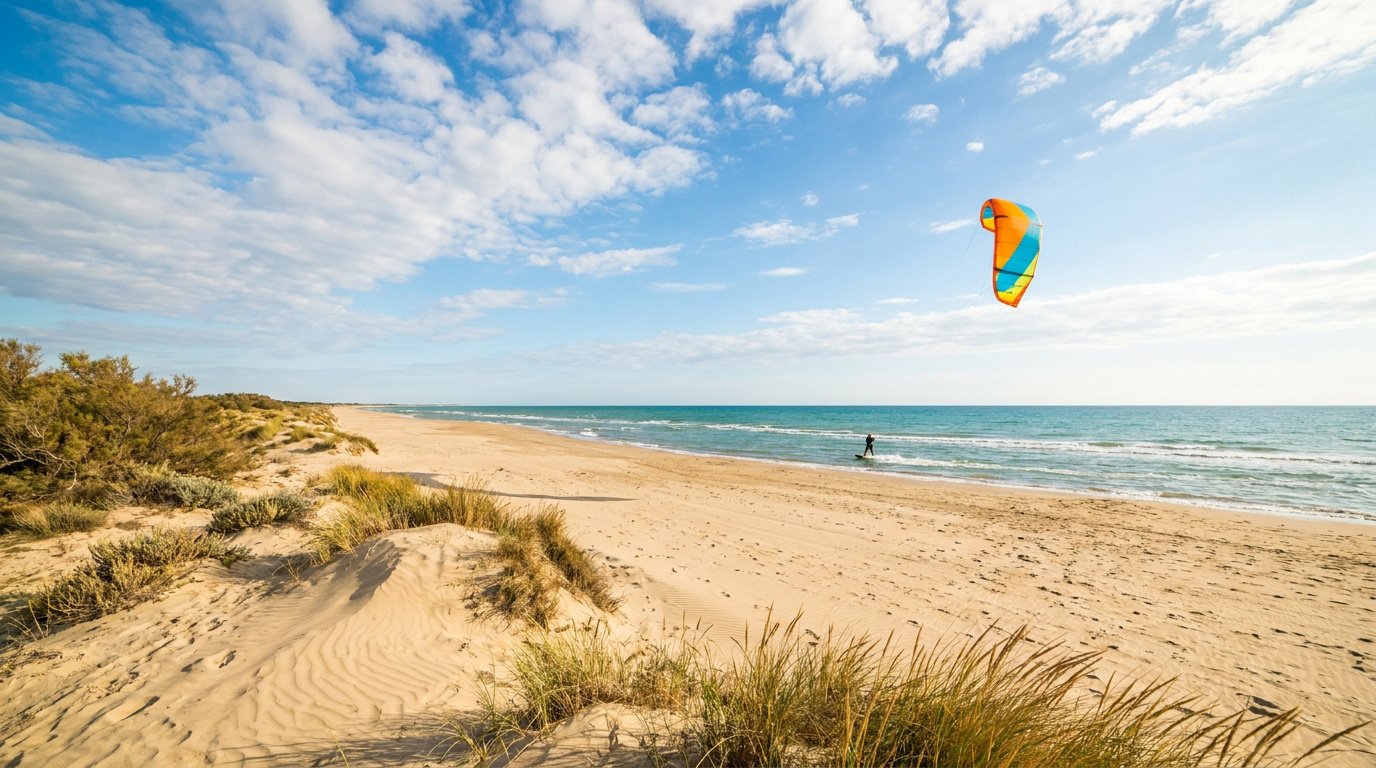
Beauduc Beach represents a fifteen-kilometer stretch of coastal wilderness where the Rhone Delta meets the Mediterranean Sea. Access to this protected site remains restricted by a ten-kilometer unpaved track and a physical width barrier of 2.10 meters at the entrance.
Navigating the logistical constraints of this isolated environment often proves challenging for unprepared visitors. This guide provides a definitive overview of the technical requirements, environmental regulations, and safety protocols necessary for visiting the wild expanse of Beauduc Beach Camargue.
- Definitive Overview of the Beauduc Beach Camargue Guide
- Technical Requirements for the Off-Road Access Route
- Sporting Disciplines and Shoreline Recreation Standards
- Can I Observe Flamingos at Beauduc Beach?
- Socio-Historical Evolution of the Beauduc Cabanons
- Legal Compliance and Safety Protocols for Visitors
Definitive Overview of the Beauduc Beach Camargue Guide
Beauduc Beach, a 15-kilometer wild coastal strip in the Rhone Delta, remains accessible only via a bumpy 10-kilometer dirt track from Salin-de-Giraud, strictly limiting vehicles to 2.10 meters in width for environmental preservation.
The following analysis details the geographical and administrative framework of this isolated coastal zone.
Geographic Positioning within the Rhone Delta
Beauduc occupies the southeastern extremity of the Camargue Regional Park. This coastal expanse is strategically positioned between the Mediterranean Sea and expansive salt marshes. Such isolation defines its physical character.
The site maintains proximity to the Grand Rhône and the Sablière hamlet. Significant distance from Arles ensures a profound sense of solitude. This geographic detachment remains a primary characteristic of the area.
Surrounding ponds, notably the Étang du Figassier, frame the territory. These water bodies establish the foundation for a raw, unfragmented coastal landscape.
Wilderness Characteristics of the Coastal Strip
This white sand expanse contrasts sharply with the high-density resorts of the Côte d’Azur. Infrastructure is non-existent, with no beach clubs or sunbeds. The horizon remains entirely free from concrete developments or hotels.
Natural debris and diverse seashells accumulate along the shore. The environment conveys the atmosphere of a forgotten frontier. Human intervention remains minimal across the entire 15-kilometer stretch.
Wind-sculpted dunes and sparse vegetation dominate the topography. In this specific coastal zone, environmental conditions dictate all usage rules. The landscape reflects pure ecological processes.
Role of the Conservatoire du Littoral in Management
The Conservatoire du Littoral owns this protected site to prevent urban sprawl. Their primary mission involves maintaining the delicate ecological balance. Ownership ensures the long-term preservation of the natural heritage.
The Camargue Regional Park executes an annual management plan to regulate access. These measures protect nesting birds and sensitive habitats. Visitors must operate within these strict environmental boundaries to ensure sustainability.
Strategic planning at Picturesque Traveller emphasizes the necessity of respecting local regulations. Compliance with the Conservatoire’s directives is mandatory for all site users.
Technical Requirements for the Off-Road Access Route
Reaching this sanctuary requires more than a simple GPS coordinate; it demands a vehicle ready for a punishing trek.
Navigating the C130 Track from Salin-de-Giraud
Access to Beauduc relies solely on the Chemin de la Belugue, designated as the C130. This ten-kilometer unpaved track consists of dirt and gravel. Expect significant potholes and deep corrugated sections throughout the journey.
Driving time typically requires forty-five minutes because of the punishing surface. Excessive speed will likely damage your suspension or tires. The Faraman route remains permanently closed to public traffic. Stay on the main designated trail at all times.
Preparation is vital before you plan your first trip to such isolated environments. Reliable navigation ensures a safe arrival.
Vehicle Dimension Limitations and Enforcement
A concrete « gabari » structure restricts entrance to vehicles under 2.10 meters wide. This physical barrier effectively bans large motorhomes and wide trucks from entering. It serves as a permanent enforcement mechanism for site protection.
Quads and motocross bikes are strictly forbidden on the track by municipal decree. Authorities frequently patrol the area to enforce these environmental regulations. Oversized vans will simply not pass through the narrow concrete entrance.
| Vehicle Type | Accessible | Restriction Reason |
|---|---|---|
| Standard Car | Yes | Width under 2.10m |
| Small Van (L1H1) | Yes | Width under 2.10m |
| Large Motorhome | No | Exceeds width limit |
| Quad/MX | No | Prohibited by decree |
Self-Sufficiency Requirements for Food and Water
Beauduc offers zero shops, water taps, or public toilets. Visitors must bring every drop of drinking water required for their stay. Pack sufficient food supplies to cover the entire duration of your visit.
- 5 liters of water per person
- High-energy snacks
- First aid kit
- Sturdy trash bags
- Sun protection
Waste management remains your personal responsibility. Take all your garbage back to Salin-de-Giraud for proper disposal. Leaving trash behind threatens the local ecosystem and risks future public access to this site.
Sporting Disciplines and Shoreline Recreation Standards
Once you survive the track, the beach opens up into a world-class arena for wind and water enthusiasts.
Kitesurfing Dynamics at the La Comtesse Zone
La Comtesse is the primary zone for kitesurfing. The shallow water extends far from the shore. This makes it perfect for beginners and pros alike. The Mistral wind provides consistent power for riders.
The La Comtesse zone is specifically for kitesurfing. Optimal conditions include the Mistral and summer thermal breezes. Shallow water is perfect for all levels.
Thermal breezes often kick in during summer afternoons. It creates ideal conditions for long sessions. Many European kitesurfers travel here specifically for this reliable wind.
Respect the designated takeoff areas. Avoid flying kites near the pedestrian paths or dunes.
Safety Standards for Unsupervised Swimming
Be aware that no lifeguards patrol this beach. You swim entirely at your own risk. The open sea can be unpredictable and powerful.
Strong offshore winds can push swimmers away from the coast. Watch out for sudden currents near the sandbars. Families must keep a very close eye on children.
Maintain high vigilance during heavy Mistral conditions. It is useful for comparing wild swimming safety standards in remote coastal environments. Safety remains a personal responsibility here.
Regulatory Framework for Fishing and Telline Harvesting
Recreational fishing is allowed following national maritime regulations. Local anglers often target sea bass and sea bream. Always check for seasonal size limits.
Telline harvesting is a traditional Camargue activity here. However, strict quotas apply to recreational gatherers. You must use manual tools only. Certain zones are closed to protect the seabed and bird populations.
| Species | Minimum Size (Maille) | Permitted Method |
|---|---|---|
| Telline (Donax trunculus) | 2.5 cm | Manual tools only |
Respect the professional fishermen. Their livelihoods depend on these shared waters and resources.
Can I Observe Flamingos at Beauduc Beach?
Beyond the sports and sand, Beauduc serves as a vital sanctuary for the Camargue’s most iconic pink residents.
Flamingo Breeding Sites at Etang du Figassier
The Étang du Figassier is a major breeding ground nearby. Thousands of Greater Flamingos gather on the artificial islands. It is a spectacular sight during spring.
You can see pink clouds of birds flying overhead at dawn. They feed in the shallow brackish waters of the surrounding marshes. Their color comes from the brine shrimp they consume. It is truly a natural marvel.
This area offers exceptional wildlife observation opportunities. Visitors must prioritize the tranquility of these avian habitats during their visit.
Dune Protection and Pedestrian Access Paths
Dunes are extremely fragile ecosystems that prevent coastal erosion. Use only the marked wooden walkways to cross them. Never walk directly on the sand vegetation.
Vehicles are strictly prohibited from driving on the dune cordon. This protection ensures the survival of rare plants. Marram grass plays a vital role in stability.
To preserve this environment, please adhere to these requirements:
- Stay on marked paths
- Do not pick flowers
- Avoid dunes with pets
- Respect closure signs
Seasonal Environmental Preservation Measures
From April to July, certain areas close for nesting terns. These birds lay eggs directly in the sand. Human disturbance can lead to nest abandonment.
Use long lenses for photography to keep distance. No drones near colonies. April to July is critical nesting season for terns.
Photographers should use long lenses to keep a safe distance. Do not use drones near the bird colonies. Noise and sudden movements stress the local fauna. Preservation is more important than a close-up shot.
Follow the instructions on the temporary signage. These rules change based on the birds’ needs.
Socio-Historical Evolution of the Beauduc Cabanons
The landscape isn’t just shaped by wind and wings, but also by a unique history of human settlement.
Origins of the Informal Coastal Cabanons
Fishermen built the first « cabanons » in the early 20th century. They used salvaged materials like driftwood and scrap metal. These were simple shelters for working days.
Over decades, a vibrant community of Arlesian families grew here. They spent entire summers living off the grid. The architecture was spontaneous and deeply personal. It represented a spirit of absolute freedom.
These informal dwellings evolved into significant historical structures. Their existence defined the coastal identity for generations historical structures.
Legal Evolution of Private Shoreline Occupancy
The French state began legal proceedings to clear the beach. Building on the public maritime domain is generally illegal. Many cabins were demolished in recent years.
A few structures remain under strict legal supervision. They are now considered part of the local cultural heritage. The transition from private dwellings to public history was painful. It sparked many protests in Arles.
Today, the area is managed as a natural site. The era of permanent beach living has ended.
Arlesian Cultural Identity and Coastal Usage
Beauduc remains a symbol of identity for Arles residents. It represents a « right to the wild » for locals. Traditions like Sunday lunches on the sand persist.
The « Beauducois » lifestyle is about simplicity and community. It is a rejection of modern commercial tourism. This cultural attachment is incredibly strong and proud.
Visitors often consider packing for cultural trips when visiting this unique area. Understanding local customs is essential for a respectful visit packing for cultural trips.
Legal Compliance and Safety Protocols for Visitors
To keep this fragile freedom alive, visitors must follow specific rules regarding camping and safety.
Bivouac Authorization and Overnight Stay Limits
Traditional camping with large setups is strictly prohibited. However, small bivouac tents are often tolerated for short stays. You must dismantle your tent during the day.
Camping and caravaning are forbidden. Bivouac is tolerated only if tents are dismantled during the day. Caravans/trailers are not allowed on the sand.
Caravans and large trailers are not allowed on the sand. The goal is to prevent permanent settlements from returning. Respecting these limits ensures that the site remains open. Always check current local decrees before arriving.
Prioritize minimalist gear for your stay. Light equipment facilitates daily dismantling.
Canine Access Rules and Parking Area Conduct
Dogs are welcome on the beach itself. This makes Beauduc a favorite for pet owners. However, they must be on a leash in the parking area.
Keep your pet away from the protected dune vegetation. Birds nesting in the sand can be easily scared. Since 2018, parking is restricted to designated zones. Do not park your car on the dunes.
Clean up after your dog immediately. Maintaining cleanliness is vital for everyone’s enjoyment.
Emergency Response and Communication Logistics
Mobile phone signal is very weak or non-existent. Do not rely on your phone for navigation or help. Tell someone your expected return time.
In case of critical incidents, contact the general emergency services at 112 or the Salin-de-Giraud rescue center at 04.42.48.82.82.
In case of emergency, the nearest help is in Salin-de-Giraud. Emergency services take a long time to reach the beach. Check the weather forecast for wind changes. A sudden Mistral can be dangerous.
Success requires planning ahead for all contingencies. Preparation is mandatory for safety.
Visiting Beauduc Beach requires strict adherence to the 2.10-meter vehicle width limit and total self-sufficiency. Prioritize environmental preservation by using designated parking and dismantling bivouac setups daily. Prepare your expedition now to experience this unparalleled wild coastal sanctuary responsibly.
FAQ
What are the specific vehicle width restrictions for accessing Beauduc?
Access to Beauduc Beach via the C130 communal track is strictly limited to vehicles with a maximum width of 2.10 meters. This physical restriction effectively prohibits large motorhomes, heavy trucks, and oversized 4×4 vehicles from entering the site. Furthermore, the use of quads and motocross bikes is prohibited by municipal decree to maintain environmental safety.
Upon arrival, all authorized motorized vehicles must utilize the designated natural parking area located at the site entrance. Driving on the shoreline itself is strictly forbidden, except for authorized public service vehicles. Visitors must use the provided wooden walkways to cross the dune cordon and reach the waterfront.
Are dogs permitted on Beauduc Beach?
Canine access is permitted at Beauduc Beach, making it a suitable destination for pet owners. However, regulatory compliance requires that dogs must be kept on a leash within the parking area and throughout the back-beach zones. This measure is essential to ensure the tranquility of the site and the protection of local wildlife.
Owners are responsible for maintaining the cleanliness of the area. It is imperative to prevent pets from disturbing the fragile dune vegetation or the various bird species that utilize the shoreline for nesting and feeding.
What are the current regulations regarding overnight stays and camping?
Traditional camping and caravaning are strictly prohibited on all beaches within the Beauduc perimeter. However, a temporary bivouac is tolerated specifically in the Pointe de Beauduc sector. This authorization is subject to the mandatory requirement that all installations and tents must be dismantled and removed during daylight hours.
The management objective is to prevent the re-establishment of permanent or long-term settlements on the public maritime domain. Visitors must ensure they are fully self-sufficient and follow all local decrees, as enforcement is active to preserve the site’s wild character.
Is it possible to observe flamingos during a visit?
Beauduc is an optimal location for wildlife observation, particularly the Greater Flamingo. The nearby Étang du Figassier serves as a primary breeding ground where thousands of flamingos gather on artificial islands. This natural phenomenon is especially prominent during the spring nesting season.
To protect these colonies, visitors must maintain a respectful distance and avoid any disruptive behavior. The surrounding salt marshes and shallow ponds provide a vital feeding habitat, contributing to the high ecological value of this protected Camargue territory.
What role does the Conservatoire du Littoral play in managing the site?
The Conservatoire du Littoral is the primary landowner and protector of this coastal expanse, having acquired over 6,500 hectares to prevent urban sprawl and industrial development. Their management strategy focuses on ecological restoration and the preservation of sensitive habitats within the Rhone Delta.
In collaboration with the Camargue Regional Park, the Conservatoire implements an annual management plan. This framework regulates human usage, protects nesting birds such as terns, and addresses the ongoing challenges of coastal erosion and sea-level rise.
What safety precautions should swimmers and kitesurfers take?
Swimming at Beauduc is unsupervised and conducted entirely at the individual’s own risk. The absence of lifeguards necessitates high vigilance, particularly during strong winds or the Mistral, which can create powerful offshore currents. Families are advised to exercise extreme caution near the water’s edge.
Kitesurfers should utilize the designated « La Comtesse » zone, which is specifically optimized for the sport. While the shallow waters and consistent thermal breezes provide excellent conditions, participants must respect takeoff areas and avoid proximity to pedestrian paths or protected bird nesting enclosures.